“Googling is a sign of patient engagement”

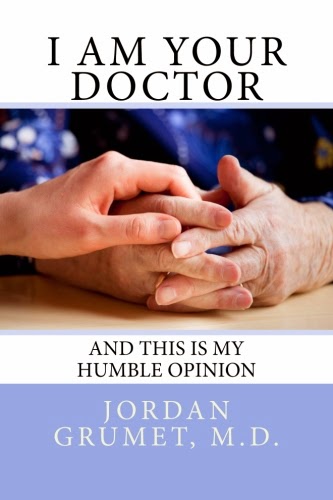
Let Patients Help book coverWrap your head around that idea. It’s one of the many insights I learned from reading Let Patients Help — and I’m freaking quoted in that chapter!

But that’s E-patient Dave, seeing things that nobody else sees and, in this case, making up words like “boogloo” (Bing + Google + Yahoo).

As he writes: 81% of U.S. adults use the internet and 72% of them have sought health information online in the past year (see: Pew Internet: Health). This is not a sign of the health information apocalypse, he and Danny Sands say, but a sign of a groundswell. What if, instead of dismissing people’s interest in doing some quick (or in-depth) research online, clinicians gave them some guidance? That’s their advice: “If patients don’t know how to do the Boogloo safely, don’t stop them from engaging — teach them how…The solution is not to restrict and constrain. Empower the people: enable, and train.”

If you’re interested in getting up to speed fast on patient engagement, Let Patients Help is your passport.

How do (older, lower-income) patients learn?

Rebecka Sexton of the Center For Innovation at the Carilion Clinic in Roanoke, VA, emailed a great question and I’d like to share it more widely:

We are working on a project here at Carilion on chronic diseases related to Population Health Management related to COPD.

I am specifically working on the education component from a service design perspective and am trying to better understand how COPD patients learn,  where their pain points are related to education, what they need education about, etc. The learnings will result in solutions and recommendations to Carilion Clinic. Of course, the social media and technology component enters in because COPD patients are often older and in western Virigina, on Medicaid and many can’t read although they might have phones. I am also considering that education occurs through conversations online too. I am wondering if you can suggest anything for me to look at related to this topic.

My reply:

I’m working on two upcoming reports that will hopefully be useful to you: how family caregivers use the internet, especially for health; how people living with chronic conditions use the internet, especially for health. We will update and expand on our previous reports about these groups:

Family Caregivers Online (2012)

Peer-to-Peer HealthCare (2011)

Chronic Disease and the Internet (2010)

In case you haven’t yet dug into them, I can also offer a summary of Pew Internet’s health research and links to two blogs I contribute to: e-patients.net and susannahfox.com.

You might also look at some of the work that the California HealthCare Foundation, the Center for Care Innovations, and Ted Eytan, MD, of Kaiser have done related to safety net populations. Here are some links to get you started (I searched for “safety net”):

CHCF.com: safety net

TedEytan.com: safety net

I also recommend looking at some of the work that Ivor Horn, MD, is doing. For example, in this presentation, she tells a compelling story about how patients, caregivers, and clinicians can better connect:

Now: let’s help Rebecka: What else would you share with her?

Never assume that what you are seeing or experiencing is everyone else’s reality.

Atul Gawande can shine a bright spotlight, even with just a few tweets. On Saturday he linked to an article about new social media guidelines for physicians which states:

Aside from not “friending” patients [on Facebook], the guidelines also recommend the following to physicians:

• Don’t use text messaging for medical interactions, even with established patients, except with caution and the patient’s consent. Continue reading

On listening, as a tool

My friend Wendy Sue Swanson, MD, delivers a passionate argument for listening more than talking online and, in that way, seeing “where myth is being created” so she can better infuse her own communications with facts.

I couldn’t agree more, so I’m adding it to my list of “participatory research” resources for my Stanford Medicine X Master Class. If you see other examples of people who invite participation in their work, please let me know here in the comments, on Twitter, or by email (sfox at pewinternet dot org).

Was it a keynote? Or a seismic warning?

Eric Topol’s keynote at HIMSS13, a massive health IT event, was a tsunami of ideas and visions for the future of health care. I wasn’t there, so I salvaged what washed up on my shore as a Storify.

Why? Because I’m an internet geologist. I look for early warning signs of possible futures and Topol was reeling them out, one after the other. He described the possible trajectory of trends we are tracking every day at the Pew Research Center: mobile, social, DIY health. It’s not reality for everyone, but it’s reality for some — and that’s exactly what we look for when we’re mapping our research agenda. What’s now and what’s next.

If you were there, what was the most surprising or exciting thing he mentioned? If you’re just tuning in and seeing the Storify, what jumps out at you as the most or least likely trend?

YouTube = Health Education Channel

Two videos recently impressed me with their use of illustration and narration to educate an audience about health.

First, the most recent video by Mike Evans, MD, who curates My Favourite Medicine:

Second, one by the 6-year-old son of Joyce Lee, MD, MPH:

Joyce wrote a thoughtful post about why she helped her son create the video: Online Peer to Peer Education or shall we call it Peer to Teacher Education?

These two videos happen to be hosted on YouTube, but of course other channels and sites are viable alternatives. What interests me is how approachable and informative they are, regardless of the production value.

The magic of Medicine X

Stanford Medicine X ended on Sunday after three (very) full days. Larry Chu deserves much of the credit for what I like about Medicine X, an “academic conferenLarry Chu and the Stanford Medicine X volunteersce designed for everyone.”

E-patients made up 10% of the audience and I appreciated their participation on stage, at the microphones, and on Twitter. There were also clinicians, entrepreneurs, venture capitalists, and artists to name just a few of the other groups represented.

I will be writing more about the conference and what I learned over the next few days, but I wanted to share two images: Continue reading

Examples, please: peer-to-peer healthcare–Susannah Fox

I’m writing an article and would love to tap into this community’s knowledge.

I know of a few examples of clinical practices using Facebook and Twitter to connect with patients, such as MacArthur OB/GYN, but I’d love to learn about other examples, especially ones which use social networking tools to connect patients and caregivers with each other.

Also, I know of patient-led groups which are powerful resources for their members, such as ACOR.org and the many groups affiliated with the National Organization for Rare Disorders, but again, I’d love to learn about some new examples, especially ones which are organized around common conditions like asthma or high blood pressure and (bonus points) have bridged the gap to include connections with clinicians.

Finally, when I think of behavior change writ large (ie, population-level) I think of organizations like Weight Watchers and Alchoholics Anonymous. Are there any other health groups that come close to those two in terms of scale and notoriety? MedHelp claims 12 million monthly visitors, for example. Does anyone else have those numbers?

Comments, please!

Doing Our Best to Blow Your Minds (Emerging Trends in Chronic Disease Care)

Here is my third post in a series of look-backs at the November 2008 Chronic Disease Care conference in San Francisco. (OK, yes, it’s now January 2009 — I’m savoring the experience, not Twittering it!)

The first post was about spreading improvement beyond early adopters, the second was devoted to patient voices, and this will focus on the panel I moderated, Health 2.0: The Power of Participation.

Judging from the audience comments we received after the event, Amy Tenderich of Diabetes Mine, David Williams of PatientsLikeMe, and Jay Parkinson of Hello Health pretty much blew everyone’s minds. Continue reading

Breaking News at Hematology Meeting – for Patients–Susannah Fox

Andrew Schorr is the founder of Patient Power, LLC, and shares this dispatch, his second for e-patients.net:

I had a whirlwind weekend at the Moscone Center in San Francisco where I broadcast five and a half hours of live interviews with leading hematologists and hematologist/oncologists on the latest news in a variety of chronic conditions. The audience was patients who could ask questions by calling our studio or via email. Continue reading